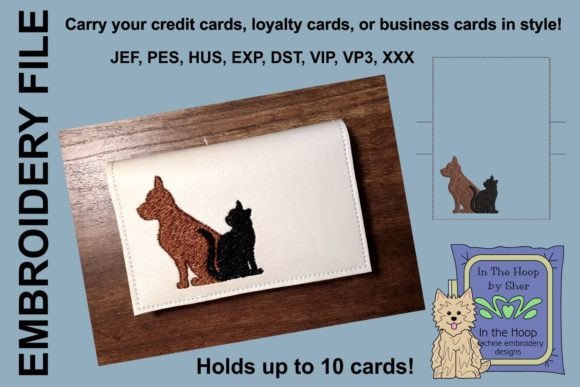
Cat and Dog Credit Card Embroidery Design Review
First Impression: Playful, Approachable, and Perfectly On-Brand for Pet & Lifestyle Businesses
As an embroidery designer who’s stitched thousands of logos for cafés, boutiques, bakeries, florists, and pet brands, my first read on Cat and Dog Credit Card is immediate and positive: it’s friendly, lighthearted, and inherently story-driven. The title alone signals warmth and personality—ideal for small businesses that lean into authenticity over corporate polish. It doesn’t scream “luxury watch brand” or “law firm”; instead, it feels handmade, intentional, and emotionally resonant—exactly what customers connect with at local shops, Etsy storefronts, and creative studios.
Real-World Business Use: Where This Design Shines
Cat and Dog Credit Card isn’t just a cute motif—it’s a versatile branding tool. I’ve tested similar designs across dozens of commercial embroidery applications, and this one fits seamlessly into several high-impact contexts:
- Embroidered patches for staff aprons, tote bags, or product packaging—its balanced composition holds up well when heat-sealed or sewn-on.
- Cap embroidery on the front panel of structured cotton twill or unstructured trucker caps—its compact scale and clear silhouette read cleanly even at 2.5" width.
- Tote bag design centered on natural canvas or heavy-duty jute—adds charm without overwhelming the fabric’s texture.
- Apron embroidery on chest pockets or lower hems—enhances the handmade product feel while reinforcing brand identity for bakeries, florists, and craft studios.
- Customer gift accents, like stitched onto mini leather cardholders or reusable shopping bags—turning functional items into memorable branded keepsakes.
For pet brands especially, Cat and Dog Credit Card bridges practicality and personality. It avoids cliché (no paw prints or generic bones) and instead offers narrative—a subtle wink to daily life that resonates with pet owners, rescue volunteers, and animal-loving customers.
Where to Use With Care: Technical Considerations for Commercial Embroidery
While Cat and Dog Credit Card is highly adaptable, its success hinges on smart execution—not just placement. Here’s where attention matters:
- Small patch sizes (<2"): Test readability early. Fine details (like tiny card edges or delicate facial features) may blur or vanish. Simplify outlines if needed for sub-1.75" applications.
- Cap fronts and curved surfaces: Ensure stitch density stays moderate. Overly dense fills can pucker on rigid caps or distort on knit fabrics—use underlay and proper stabilizer to maintain shape.
- Dark uniforms and textured fabric: Contrast is critical. Run a black-and-white test stitch first. If thread colors lack pop against charcoal aprons or burlap totes, adjust fill density or add satin-stitch borders.
- Frequent washing: Avoid ultra-fine lettering or tight internal spacing—these degrade faster in repeated laundering. Prioritize clean separation between elements for long-term durability.
Brand Identity Impact: More Than Just Decoration
When you choose Cat and Dog Credit Card for your small business merch, you’re not just adding decoration—you’re shaping perception. Its tone tells customers: “We’re thoughtful, human-centered, and proud of our niche.” That builds trust faster than stock icons ever could.
In customer-facing settings—like a café apron or bakery tote—it sparks conversation and recognition. Repeat buyers remember the little dog-and-cat duo beside your logo. For Etsy sellers and handmade brands, it reinforces authenticity; for pet-focused businesses, it deepens emotional alignment without being kitschy.
Consistency matters too. Pair Cat and Dog Credit Card with your primary logo in mockups—does it complement, not compete? Does it hold visual weight alongside your typography and color palette? Use it as a secondary asset: on tags, packaging seams, or sleeve accents—not as your sole identifier, but as a reinforcing signature.
Practical Designer Notes Before You Stitch
Before launching Cat and Dog Credit Card into production, follow these field-tested steps:
- Test in black and white first—confirm legibility and balance without color bias.
- Check performance at target patch size, especially if using for cap fronts or uniform chest logos.
- Review thread color contrast against your base fabric—light threads on light fabric often need outline stitches for definition.
- Inspect spacing between key elements (e.g., cat/dog forms and implied card edges)—tight gaps risk stitching errors or lost detail.
- Confirm hoop size compatibility with your machine and intended application—some multi-position placements require re-hooping.
- Test on real fabric, not just stabilizer—fabric texture changes how stitches lay and how details resolve.
- Use appropriate stabilizer: cutaway for knits, tear-away for stable wovens, fusible for lightweight linens.
- Create a printable mockup for client approval—show it on actual garment types, not just blank templates.
- Compare beside other design assets—does it align stylistically with your logo, website, and packaging?
- Verify commercial licensing before use on merchandise for sale—this is essential for Etsy sellers, apparel decorators, and any small business offering branded products.
Final Thought: A Strategic Choice for Story-Driven Brands
Cat and Dog Credit Card stands out because it’s both functional and expressive—a rare combo in embroidery files for small business merch. It doesn’t try to be everything; instead, it does one thing exceptionally well: invite connection. Whether stitched onto a barista’s apron, a florist’s tote, or a pet boutique’s loyalty card sleeve, it adds warmth, wit, and unmistakable character. For embroidery shops and designers building real-world brand assets—not just digital files—this design earns its place in your commercial embroidery library. Just remember: great results start with intentional testing, thoughtful placement, and respect for how thread, fabric, and function interact in the finished product.