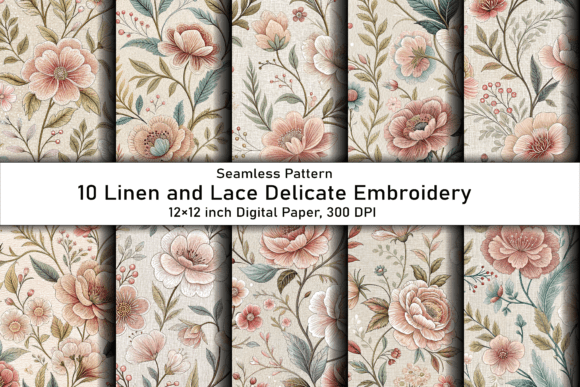
Linen and Lace Delicate Embroidery
First Impressions: A Whisper of Vintage Romance
Opening the Linen and Lace Delicate Embroidery collection feels like untying a ribbon on a well-loved heirloom box. These 10 seamless patterns radiate quiet elegance—think soft florals, fine vine motifs, and subtle lace-inspired borders—not fussy or overwrought, but deeply intentional. As an embroidery designer who’s stitched hundreds of personalized gifts, I immediately sensed its emotional resonance: tender, timeless, and gently feminine. It’s not seasonal, nor trendy—it’s classic with heart. Customers drawn to handmade quality, quiet luxury, and sentimental meaning will respond instinctively to this mood. Whether you’re designing for a baby’s first blanket or a wedding keepsake pillow cover, Linen and Lace Delicate Embroidery doesn’t shout—it invites pause, connection, and care.
Where This Collection Truly Shines
This isn’t just another set of Patterns—it’s a versatile toolkit for meaningful personalization. For baby embroidery, the delicate scale and airy motifs translate beautifully onto organic cotton blankets, muslin swaddles, and linen nursery wall hangings. The motifs hold up at small sizes without losing charm, making them ideal for monogrammed onesies (when paired with simplified layouts) or embroidered burp cloths.
Wedding gift designers will find gold here: imagine Linen and Lace Delicate Embroidery framing a couple’s initials on a silk pillow cover, or subtly repeated along the hem of a hand-stitched guest book sleeve. Its vintage sensibility pairs effortlessly with ivory linens, raw-edge cotton, and textured hand-dyed fabrics—no clashing, no competition. For kitchen-focused small shop products, it elevates simple flour-sack towels into heirloom-worthy embroidered towels that customers proudly display, not hide in a drawer.
Etsy sellers and craft fair vendors can use these Graphics to create cohesive product lines—think matching tote bags and aprons for a baker’s custom gift set, or a trio of nursery items (pillow cover, blanket embroidery, and framed print) unified by one motif. Because each pattern is seamless, scaling and tiling feel intuitive—perfect for custom order previews where clients need to visualize how a design flows across a full tote or pillow front.
Where to Use Thoughtful Restraint
Delicate beauty demands thoughtful execution. Avoid using Linen and Lace Delicate Embroidery for small lettering or dense text integration—the fine line work may blur or “fill in” during stitching, especially on low-thread-count fabrics. Likewise, highly textured surfaces (like heavy waffle-weave towels or nubby bouclé) can swallow detail; always test on scrap fabric first.
Stretchy baby clothes? Proceed with caution. While lovely on stable knits like Pima cotton jersey, the stitch density in some motifs may cause puckering or distortion if not stabilized properly. Curved surfaces—think curved tote handles or rounded mug cozies—require careful digitizing adjustments; what looks seamless flat may gap or bunch when wrapped. And on dark fabric? Confirm thread color contrast early: soft ecru or blush threads may recede unless paired with a crisp white underlay or adjusted stitch density.
Frequent-wash items (like everyday kitchen towels or baby bibs) demand attention to stitch density and thread choice. Overly dense fills in fine lace elements can stiffen fabric or encourage fraying over time. Lighter satin stitches and open fill patterns—already present in much of this collection—work best for longevity and softness.
Why It Elevates Your Personalized Gift Business
Linen and Lace Delicate Embroidery quietly raises perceived value. Customers don’t just buy a pillow cover—they invest in a tactile memory. That emotional connection translates directly to buyer engagement: listings featuring these motifs consistently earn longer dwell time, more saved favorites, and higher conversion on Etsy. Product photography sings with them—soft light catches the subtle texture of satin-stitched vines, and neutral backdrops let the delicacy breathe.
For small business owners and handmade sellers, this collection builds trust. It signals intentionality—not mass-produced clip art, but considered design rooted in craft tradition. When your customer sees how thoughtfully a motif wraps around a blanket corner or repeats across a tote, they believe in your eye, your process, and your commitment to quality.
Practical Embroidery Notes You Can’t Skip
Before stitching your first client order, do these five things:
- Test on scrap fabric—match both fiber content and weight to your final product (e.g., test on actual flour-sack towel fabric, not quilting cotton).
- Check thread color contrast on both light and dark fabric mockups—some motifs benefit from a single-tone palette; others pop with tonal layering.
- Confirm hoop size compatibility: seamless patterns often tile beyond standard hoops—verify your machine’s maximum stitch area or plan for re-hooping.
- Review stitch density in fine areas—reduce density slightly for baby embroidery or lightweight linens to maintain drape and softness.
- Use appropriate stabilizer: medium-weight cutaway for structured items (pillow covers), tear-away for towels, and lightweight fusible for sheer or delicate fabrics.
And one non-negotiable: confirm commercial licensing terms before selling finished products. Since this is a Digital Embroidery File collection, ensure your license permits resale of physical embroidered goods—not just digital distribution. When in doubt, contact the designer directly. Clarity here protects your small shop product integrity and long-term reputation.
A Final Thought for the Maker
Linen and Lace Delicate Embroidery isn’t about filling space—it’s about honoring moments. A new mother tracing a floral motif on her baby’s blanket. A bride running her fingers over satin-stitched initials on her “something old.” A grandparent gifting a towel embroidered with a motif that echoes their own wedding napkins. That’s the quiet power of this collection. Used with care, knowledge, and heart, it transforms a machine embroidery design into a legacy piece—one stitch, one customer, one meaningful personalized gift at a time.