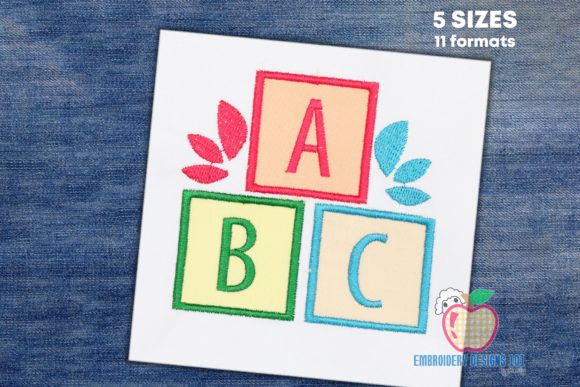
Applique Design of ABC Blocks
First Impression: Bold, Playful, and Instantly Recognizable
As an embroidery designer who’s prepped over 200 craft fair booths—from Portland pop-ups to Nashville handmade markets—I opened the Applique Design of ABC Blocks file expecting charm. What I got was stronger: confident visual clarity with genuine kid-at-heart appeal. It reads as bold (not babyish), playful (not chaotic), and classroom-ready without leaning into cliché schoolhouse tropes. The block motif grounds it in tactile familiarity—think wooden toys, not clipart—and that makes it a standout for boutique makers targeting parents, educators, and gift-givers who value handmade quality over mass-produced cuteness.
Where It Shines on Craft Fair Products
This design doesn’t just sit well on fabric—it *performs*. On a natural canvas tote bag? Perfect 6-inch placement gives instant focal energy without overwhelming. On a denim apron? The clean lines hold up beautifully against stitching seams and pocket edges. For tea towel embroidery? Use the 4-inch size centered on the lower corner—it adds personality without competing with flour-dusted countertops or steamy stovetops.
As an embroidered patch? Absolutely viable. The 4×4 and 5×7 sizes translate cleanly to iron-on or sew-on applications, especially when backed with lightweight fusible web. Small pouches and pillow covers benefit from the 5-inch or 6-inch versions—the scale feels intentional, not cramped. And for caps? Stick to the 4-inch version only on structured front panels; avoid curved crowns unless you’ve tested stitch lay on scrap buckram first.
Photography & Online Appeal for Etsy Sellers and Digital Crafters
The Applique Design of ABC Blocks is a photographer’s friend. Its high-contrast shapes, clear negative space, and balanced letter spacing render sharply—even on smartphone shots. That means your printable mockup looks professional before you stitch a single piece. For Etsy sellers, this translates directly to faster buyer trust: customers can *see* the craftsmanship potential in your listing thumbnail. Bonus? It scales elegantly across product types—your tote bag photo doesn’t look like a different design than your tea towel shot. That consistency strengthens brand recognition across your shop.
Batch Production Reality Check
Yes, this is a repeatable design—but only if you respect its structure. The block outlines are generous, but internal letter fills (especially “Q,” “R,” and “G”) carry moderate stitch density. Don’t rush through 50 units without verifying thread tension on your machine’s current setup. And remember: each size change alters stitch count meaningfully. A 4-inch version may run 3,800 stitches; the 8-inch could hit 12,500. That impacts hooping time, bobbin changes, and heat buildup on delicate fabrics.
Careful-Use Notes Every Handmade Shop Owner Should Know
- Tiny details: Lowercase “i” and “j” dots are small—avoid sub-4-inch sizes on textured towels or thick terry cloth. They’ll blur.
- Fabric texture matters: On looped cotton tea towels or waffle-weave kitchen linens, use tear-away + light cut-away stabilizer combo. Skip heavy mesh—it fights the applique’s soft edge.
- Dark fabric warning: If embroidering on navy, charcoal, or black denim, test thread contrast *before* cutting fabric. Some digitizers default to pastel top threads—swap to bright white, kelly green, or primary red for maximum pop.
- Hoop size alignment: The design offers five sizes spanning 4×4 to 8×12 hoops. Confirm which file matches your machine’s largest hoop *before* loading—don’t assume the “8in” version fits your 8×8 frame without checking actual dimensions in your software.
Why This Design Strengthens Your Booth & Brand
In a sea of floral monograms and minimalist quotes, Applique Design of ABC Blocks delivers joyful differentiation. It draws eyes at 10 feet—not because it’s loud, but because it’s *recognizable*. Parents pause. Teachers point. Grandparents smile. That micro-moment of connection is where craft fair sales begin.
It also elevates perceived value. Applique reads as more labor-intensive—and therefore more premium—than standard satin-stitch lettering. When stitched on organic cotton tote bags or linen pillow covers, it signals intentionality and care. For small shop owners building a cohesive line (e.g., “Back-to-School Essentials” or “Learning Through Play”), this design anchors collections without needing rebranding.
Pro Designer Notes Before You Stitch
- Test the Applique Design of ABC Blocks on scrap fabric matching your final product—same weight, same finish, same dye lot.
- Check thread contrast under natural light *and* booth lighting. LED market tents wash out subtle tones.
- Review spacing between blocks: Are letters evenly kerned? Does the “O” visually align with “D” and “P”? Zoom in before cutting.
- Confirm hoop size compatibility—some 8×12 files require precise centering or rotation; don’t guess.
- Inspect stitch density in corners and inner curves. High-density zones may pucker on lightweight cotton unless stabilized properly.
- Use appropriate stabilizer: medium-weight cut-away for knits, tear-away + light fusible for stable wovens, adhesive + tear-away for patches.
- Create *at least one real mockup*—not just a digital preview—before ordering bulk fabric.
- Compare how the design reads on light vs. dark fabric swatches. Adjust thread palette accordingly.
- Verify commercial licensing terms. As a digital embroidery file, Applique Design of ABC Blocks must be cleared for resale of finished products—check the seller’s policy before listing on Etsy or wholesale platforms.
Final Thought for Creative Entrepreneurs
This isn’t just another machine embroidery design. It’s a versatile, emotionally resonant asset—one that bridges playfulness and polish, education and everyday joy. Whether you’re launching a new line of craft fair product, refreshing your small shop product catalog, or building signature pieces for your Etsy seller store, the Applique Design of ABC Blocks earns its place in your design assets. Just treat it with the attention it deserves—test, tweak, and trust the process. Your booth, your buyers, and your bottom line will thank you.