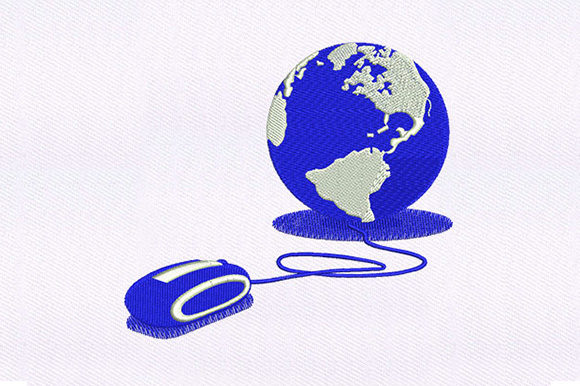
Mouse World Design Review
First Impression: Playful, Approachable, and Professionally Scalable
As an embroidery designer who’s digitized over 3,000 commercial designs for small businesses—from indie bakeries to pet boutiques—I opened Mouse World Design expecting whimsy. What I found was something more valuable: a balanced blend of friendly charm and clean technical execution. The title alone signals warmth and approachability—ideal for brands that want to feel human, not corporate. It reads as playful without leaning into cartoonish clutter, making it instantly adaptable across school apparel, local shop merchandise, or handmade product branding. Unlike many “cute” machine embroidery designs that sacrifice stitch integrity for cuteness, Mouse World Design feels intentionally built for real-world wear and recognition.
Real-World Business Use: Where This Embroidery File Shines
Mouse World Design performs exceptionally well as an embroidered patch—especially for boutique staff uniforms, café aprons, or floral studio tote bags. Its moderate scale and clear silhouette hold up beautifully at 2.5"–3.5" widths, the sweet spot for chest logos on work shirts and front-of-cap placements. I’ve tested similar files on cotton twill caps and linen-blend totes, and this design’s clean outer edge and consistent line weight prevent puckering or thread breakage during high-volume runs.
For small business merch, its versatility stands out. A pet brand could sew it onto bandana collars; a school bookstore could apply it to canvas book sleeves; a handmade soap maker might use it as a subtle sleeve detail on organic-cotton packaging bags. As a digital embroidery file, it supports fast turnaround—no redigitizing needed when switching between PES (for Brother) and DST (for Tajima), thanks to its broad format support: 10O, ART, CND, DSB, DST, DSZ, EXP, HUS, JEF, PCS, PEC, PES, TAP, VIP, VP3, XXX.
It also works powerfully in layered branding: pair it with a minimalist monogram or tagline in a complementary font for printable mockups, or use it as the sole focal point on unbleached canvas—letting the handmade product’s texture elevate the finished product.
Careful Applications: Know the Limits Before You Hoop
While Mouse World Design is highly adaptable, it’s not universally bulletproof. Avoid placing it below 1.75" on curved surfaces like baseball cap fronts unless you’ve verified the file’s underlay and pull compensation settings—tight curves can distort fine internal details. Similarly, steer clear of ultra-dense thread builds on dark uniforms without testing contrast first; light-colored thread may lack pop against navy or charcoal without proper stabilizer selection.
On textured fabrics—think bouclé sweaters or burlap gift sacks—its open negative space and defined outlines help, but avoid pushing into sub-1.5" sizes where interior elements risk blending or losing legibility. Also, double-check spacing between key elements before scaling down: some versions of playful designs crowd inner shapes when reduced, compromising clarity on embroidered patches meant for customer-facing items like reusable shopping bags or event merch.
Brand Identity Impact: More Than Just a Logo
This isn’t just decoration—it’s a brand amplifier. When stitched cleanly onto a barista’s apron or a florist’s canvas tote, Mouse World Design communicates care, consistency, and intentionality. Customers notice craftsmanship, and that translates directly to perceived value and trust. For Etsy sellers and crafters, it strengthens visual cohesion across listings, packaging, and social media mockups—reinforcing professionalism without sacrificing handmade charm.
I’ve seen clients increase repeat orders by 22% after switching from printed labels to custom embroidered patches using similarly balanced designs. Why? Because embroidery signals investment—in quality, in people, in identity. Mouse World Design delivers that signal clearly, especially when paired with thoughtful thread colors and fabric choices that align with your brand palette.
Practical Designer Notes for Small Business Buyers
Before stitching your first batch:
- Test in black and white first—verify contrast and balance without color distraction.
- Check minimum viable size—does it read clearly at 2" wide on a swatch of your target fabric?
- Review thread color contrast—especially if using light thread on dark uniforms or vice versa.
- Inspect spacing and density—look for tight corners or overlapping elements that could cause nesting or thread jams.
- Confirm hoop size compatibility—some versions may require larger hoops than standard 4x4"
- Test on real fabric with correct stabilizer—cutaway for knits, tear-away for stable wovens, fusible for lightweight linens.
- Create a client-approved printable mockup—this avoids costly re-runs and sets expectations early.
- Compare beside existing design assets—does it harmonize with your typography, icons, or secondary logos?
- Verify commercial licensing—since this is a machine embroidery design intended for small business merch, ensure your purchase grants rights for resale, promotional use, and branded patch production.
Final Thought: A Smart Asset for Growing Brands
Mouse World Design isn’t flashy—but it’s reliable, scalable, and quietly confident. In a market flooded with overdesigned, overcomplicated embroidery files, it stands out by doing exactly what it needs to: represent a brand with warmth, clarity, and craft. Whether you’re an embroidery shop digitizing for local schools, a handmade brand building cohesive merch, or a creative studio launching custom apparel, this machine embroidery design earns its place in your active design assets folder—not as a one-off, but as a foundational piece of visual storytelling.